Physics
First
M² Engineering helps companies understand complex engineering systems, identify what limits performance, and make better design and operating decisions.
Engineering Capabilities
Choose the problem that is limiting performance, creating uncertainty, or holding back a design or operating decision.
Computational Fluid Dynamics
Find where flow distribution, pressure loss, mixing, or heat transfer is limiting system performance.
Coupled Physics Simulation
Understand when interacting thermal, fluid, reactive, structural, or electrical effects change the engineering answer.
Thermal Engineering
Identify hotspots, temperature limits, heat paths, and practical heating or cooling strategies.
Process Engineering
Find bottlenecks, operating limits, equipment interactions, and scale-up risks.
Engineering Optimization
Compare design choices and identify the best practical trade-off between performance, constraints, and cost.
Neural Operators
Accelerate repeated field predictions across a verified operating range while preserving the physics behind the model.
Capability 1
Engineering Evidence
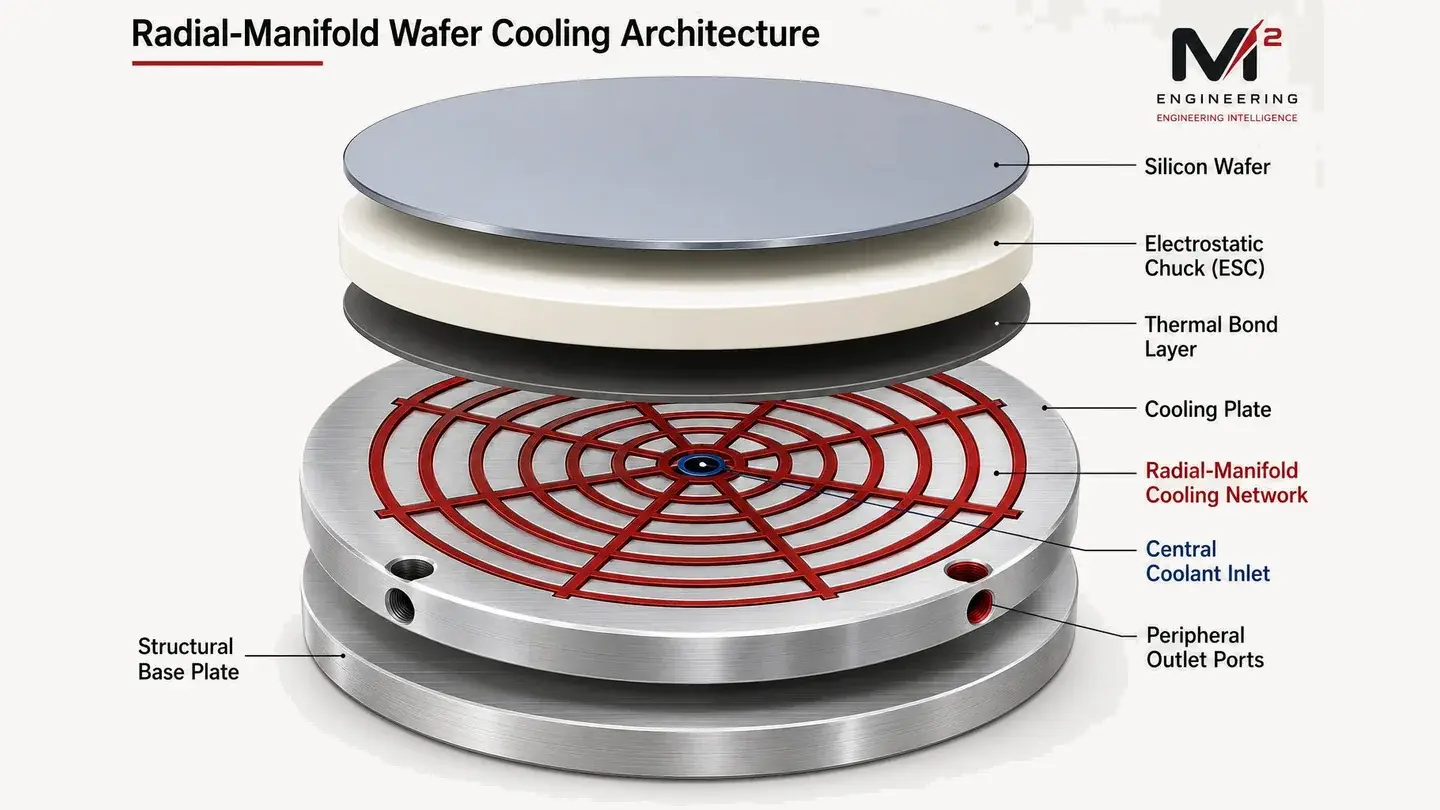
Semiconductor Wafer Cooling
Compares wafer cooling architectures for plasma-induced hotspots and shows how manifold design affects temperature uniformity on 300 mm wafers.
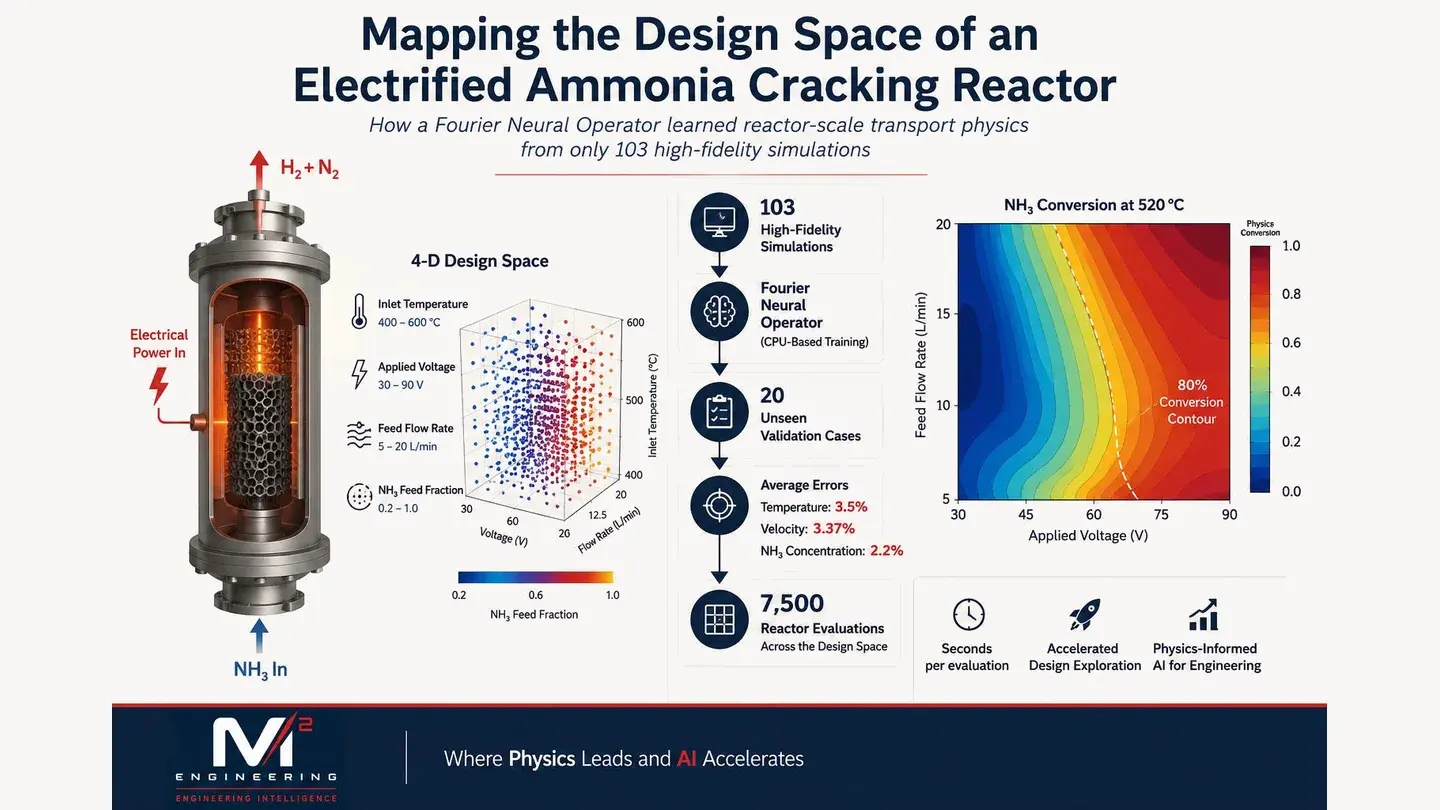
Mapping the Design Space of an Electrified Ammonia Cracking Reactor
A surrogate trained on 103 high-fidelity reactor simulations was then used to evaluate about 7,500 design points inside a defined parameter space.
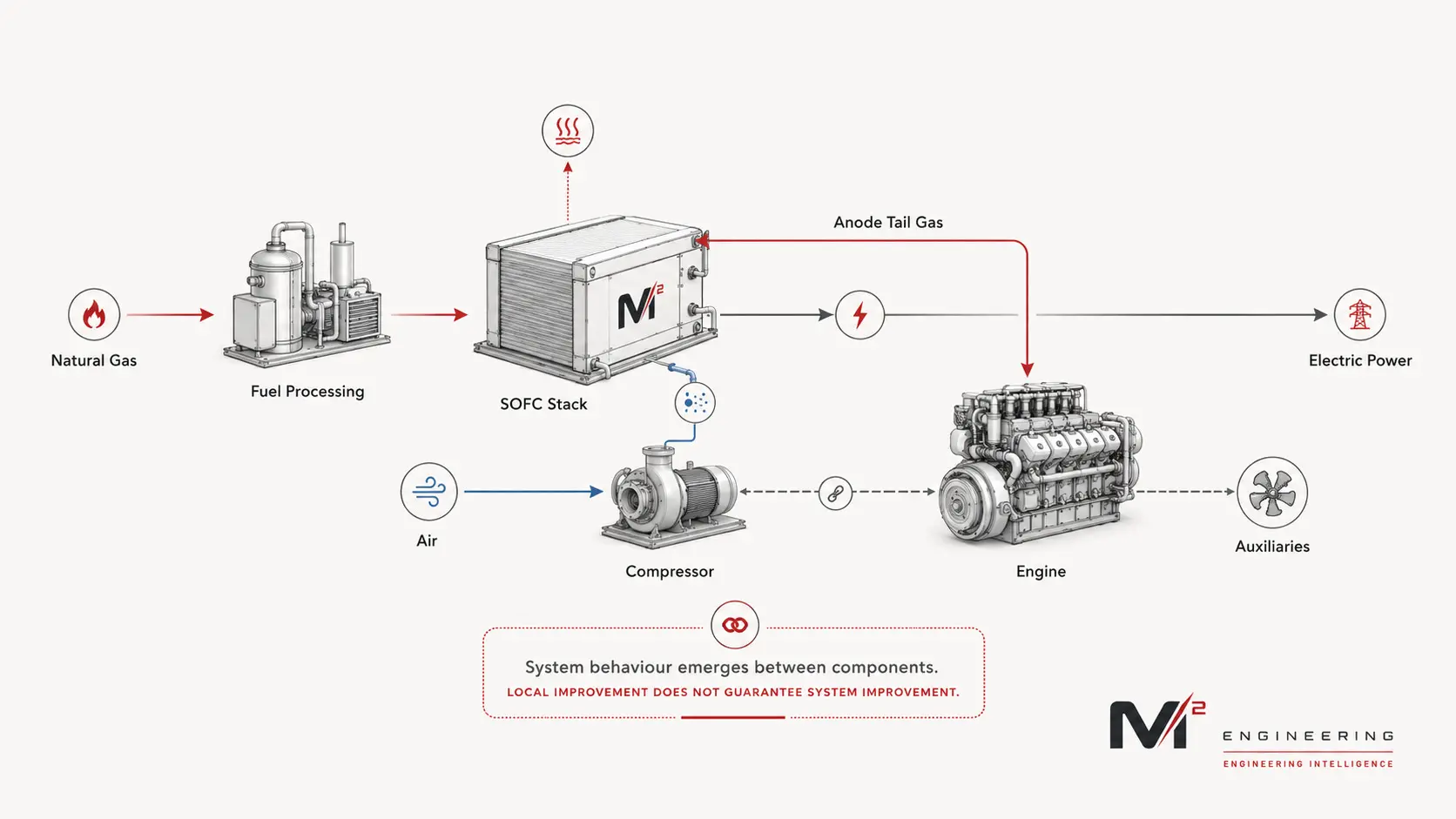
The Best Component Can Still Produce the Wrong System
Shows why a locally optimized component can still fail system targets when interactions, constraints, and operating envelopes are ignored.
Study 1
From Engineering Question to Decision
Rigorous analysis begins with the decision that needs to be made, then identifies the controlling physics, tests the available evidence, and turns the result into practical action.
Define the Decision
Clarify what needs to be designed, changed, compared, or understood.
Identify What Controls Performance
Determine which physical mechanisms actually govern the result.
Test the Evidence
Check assumptions, operating conditions, measurements, and model limitations.
Turn Results Into Action
Translate the analysis into design choices, operating limits, or clear next steps.
Have a difficult engineering problem?
Tell us what the system is doing, what you need to understand, and what decision you need to make. We can determine what analysis is appropriate and what evidence is needed.
Tell Us the Problem